While most of the world's attention in the electric vehicle space focuses on Tesla, BYD, and the battle for the electric car market, one Nigerian company has been quietly building something arguably more transformative: Africa's largest electric motorcycle platform. MAX — originally Metro Africa Xpress, now rebranded simply as MAX — has evolved from a humble motorcycle delivery service in Lagos into a mobility and vehicle financing powerhouse with $87 million in total funding, an electric vehicle assembly facility, partnerships with global manufacturers, and ambitions to put 250,000 drivers on electric two-wheelers across West and Central Africa by 2027.
Founded in 2015 by Adetayo Bamiduro and Chinedu Azodoh, MAX has completed over 9 million trips, achieved profitability in Nigeria, and secured a fresh $24 million funding round in early 2026 — a feat that few African startups can claim in a funding environment that has grown significantly tighter since the boom years of 2021-2022. MAX's story is one of strategic evolution, patient growth, and a bet on electric mobility that could position Nigeria at the forefront of Africa's clean transportation revolution.
The Origin Story: Solving Lagos's Last-Mile Problem
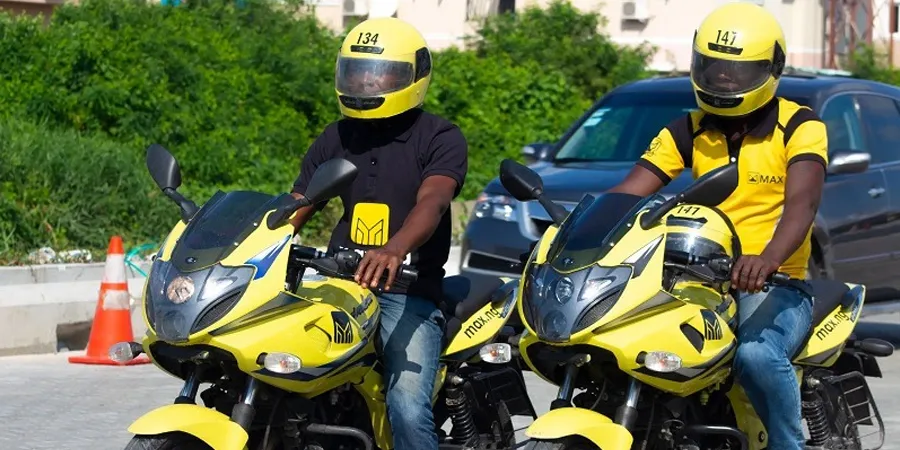
MAX was born from a simple observation: Lagos, a city of 20+ million people, has a massive last-mile transportation and delivery problem, and motorcycles are the most practical solution. While car-based ride-hailing services like Uber and Bolt get stuck in Lagos's legendary traffic, motorcycles weave through congestion, reaching destinations in a fraction of the time. Millions of Lagosians already relied on informal okada (motorcycle taxi) riders for daily transportation, but the experience was chaotic, unsafe, and unregulated.
Bamiduro and Azodoh — both products of Nigerian and international education — saw an opportunity to formalise motorcycle transportation through technology, training, and standardisation. MAX launched as a delivery-focused platform, connecting businesses with trained motorcycle riders who could move packages across Lagos quickly and reliably. The company invested heavily in rider training, safety equipment, and technology infrastructure, building a platform that businesses could trust for time-sensitive deliveries.
The early focus on deliveries rather than passenger rides proved prescient. When the Lagos State Government banned commercial motorcycles from major roads in February 2020, MAX was affected but not devastated — its delivery operations could continue, and the company had already been building its logistics capabilities. While competitors like Gokada scrambled to pivot their entire business model, MAX simply doubled down on what was already working.
The Pivot to Vehicle Financing and Electric Mobility
MAX's most significant strategic evolution came when the company recognised that the biggest barrier for motorcycle riders in Nigeria wasn't access to ride requests — it was access to vehicles. Most commercial motorcycle riders in Nigeria don't own their bikes. They rent from fleet owners, often at exploitative rates that consume a massive portion of their daily earnings. The riders who do own their motorcycles frequently purchased them through informal, high-interest financing arrangements.
MAX saw an opportunity to become not just a ride-hailing platform but a vehicle financing company. Through its pay-as-you-go (PAYG) model, MAX provides motorcycles to riders on a hire-purchase basis. Riders make daily payments from their earnings, and after completing all payments, they own the motorcycle outright. This model — which MAX has refined over years of operation — aligns the company's interests with its riders' interests: MAX only gets paid when riders are working and earning, creating a natural incentive for the company to support rider success.
The PAYG model also provided the foundation for MAX's electric vehicle push. By controlling the vehicle financing and distribution process, MAX could introduce electric motorcycles into its fleet without requiring riders to make the capital investment in new, unfamiliar technology. Riders receive electric motorcycles through the same PAYG model, with MAX handling battery charging and swapping infrastructure.
Electric Motorcycles: MAX's Big Bet
MAX's commitment to electric mobility goes far beyond marketing. The company operates an EV assembly facility in Ibadan, Nigeria's third-largest city, with the capacity to produce up to 3,600 vehicles per month — covering both two-wheel and three-wheel electric vehicles. MAX partners with international original equipment manufacturers (OEMs) including Yamaha, Hero, and Spiro to deliver vehicles optimised for African road conditions, climate, and usage patterns.
The electric motorcycles that MAX deploys are purpose-built for commercial use in African cities. They need to handle poor road conditions, extreme heat, heavy daily usage, and limited charging infrastructure. MAX has addressed the charging challenge through a battery swapping model — rather than plugging in and waiting hours to charge, riders visit MAX battery swap stations where they exchange depleted batteries for fully charged ones in minutes, minimising downtime and maximising earning potential.
The environmental case for electric motorcycles in Nigeria is compelling. Commercial motorcycles are among the most significant contributors to urban air pollution in Lagos and other Nigerian cities. They typically run on inefficient two-stroke or four-stroke engines that produce disproportionate emissions relative to their size. Replacing these with electric alternatives would meaningfully improve air quality in some of the world's most polluted urban environments.
The economic case is equally strong. Electric motorcycles have significantly lower fuel and maintenance costs than their petrol counterparts. In a country where fuel prices have risen dramatically following subsidy removals, the savings from switching to electric can substantially improve rider economics. MAX estimates that riders operating electric motorcycles save significantly on daily operating costs compared to petrol motorcycles, savings that flow directly to the bottom line.
Funding and Financial Performance
MAX's funding journey reflects both the company's growth and the evolving investor sentiment toward African startups. The company's most significant rounds include a $31 million Series B in 2021, led by Lightrock and Global Ventures, which was earmarked for African expansion and EV infrastructure development. Most recently, MAX secured a $24 million round in early 2026, comprising both equity and debt, following the company's achievement of profitability in its Nigerian operations.