
    Lagos 1851 vs Japan 1853: Two Forced Openings, Opposite Outcomes

    Two gunboat visits in the 1850s—Lagos 1851 & Japan 1853—had opposite outcomes. Discover why external pressure destroyed one nation but galvanized another.

    Jump to
    Lagos 1851 vs Japan 1853: Two Forced Openings, Opposite Outcomes
    Illustration · CareerBuddy

    Edo No Be Lagos: Why Two Gunboat Visits in the 1850s Changed Everything — for Very Different Reasons

    In 1851, British warships bombarded Lagos into submission. In 1853, American warships sailed into Tokyo Bay with the same energy. Both encounters looked roughly the same. What followed could not have been more different.
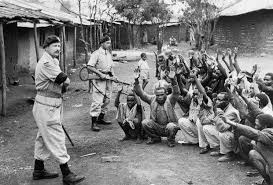
    In 1851, British warships bombarded Lagos into submission

    The scene, in both cases, is disturbingly familiar. Foreign warships in a harbor. Guns trained on the coast. A demand: open your ports, sign our terms, or we fire. The threat is real. The target nation's military cannot match what is approaching them. The outcome — at least in the immediate moment — is the same: the foreigners get what they came for.

    But in Lagos, what followed was annexation, colonization, and eventual absorption into a British protectorate that would define the next century of Nigerian political life. In Japan, what followed was one of the most remarkable national transformations in recorded history: within thirty years, the country that had been threatened at gunpoint had built a modern military, a constitutional government, an industrial economy, and a navy capable of defeating Russia — the first time in the modern era that a non-Western nation had defeated a European one.

    Same technology. Same era. Same basic threat. Completely different outcomes. The question of why is not just a history question. It is a question about institutions, agency, and the conditions under which external pressure becomes the force that destroys a society rather than the one that galvanizes it.

    •   •   •

    Lagos, December 1851

    The British did not arrive in Lagos in 1851 purely for commercial reasons, though commerce was involved. The official pretext was the suppression of the Atlantic slave trade. Oba Kosoko of Lagos was a known participant in the trade, and British abolitionist interests had been building a case for intervention for years.

    What made it happen when it did was a combination of factors: British missionary interests, the lobbying of Saro elites (formerly enslaved Africans liberated by the British Navy and resettled in Sierra Leone, some of whom had returned to Lagos), and Kosoko's rival Akitoye, a previous Oba who had been deposed by Kosoko and who had asked the British to help him return to power.

    Samuel Ajayi Crowther, a Yoruba man who had been liberated by the British Navy, converted to Christianity, and became a missionary, argued the case for intervention directly before Queen Victoria and Lord Palmerston in August 1851. His argument was that a Lagos under Akitoye and allied with Britain would suppress the slave trade and guarantee British commercial access. The Admiralty was persuaded.

    The first attack in November 1851 failed badly. Kosoko's forces — reportedly five thousand men armed with muskets, along with extensive shore fortifications — inflicted enough damage on the British party that Commander Forbes ordered a retreat. The second attack in December, with overwhelming firepower and three days of sustained fighting, succeeded. Kosoko fled. Akitoye was installed. A treaty was signed on January 1, 1852, requiring Lagos to abolish the slave trade, liberate enslaved Africans, and allow British subjects trade access.

    Ten years later, in 1861, Britain annexed Lagos outright as a protectorate.

    •   •   •

    Edo Bay, July 1853

    Commodore Matthew Perry arrived in what is now Tokyo Bay on July 8, 1853, with four warships — two steam-powered, trailing black smoke in a way the Japanese had never seen — and a letter from US President Millard Fillmore to the Emperor of Japan. Perry's actual goal was less about Japan specifically than about establishing a coal station for American steamships making the Pacific crossing to China. Japan was a geographical convenience that happened to have been closed to almost all foreign contact for over two hundred years under the Tokugawa shogunate's policy of sakoku; a locked country.

    Perry fired blank rounds from his 73 cannons, claimed it was a Fourth of July celebration, and demanded that suitable officials receive the President's letter. When the Japanese attempted to redirect him to Nagasaki — the only designated port for foreign contact — he threatened to march on Edo. He was allowed to land. He delivered the letter. He left, saying he would return the following year for an answer.

    He did return, with a larger fleet. The Convention of Kanagawa was signed in March 1854, opening two Japanese ports to American ships. Over the following years, similar treaties with Britain, France, Russia, and the Netherlands followed. The Japanese called them the Unequal Treaties, and that name captures exactly what they understood about what had happened.

    •   •   •

    The Fork in the Road

    Here is where the two stories diverge, and the divergence is not incidental.

    Japan's response to Perry's arrival was an internal crisis, then a radical reinvention. The shogunate that had governed Japan for two and a half centuries was already under strain from internal political tensions, and the humiliation of the Unequal Treaties — which stripped Japan of control over its own tariffs and gave foreign nationals immunity from Japanese law on Japanese soil — provided the reformist faction with the case they needed. In 1868, fifteen years after Perry's ships appeared in the bay, a coalition of reformers overthrew the shogunate in what became known as the Meiji Restoration.

    What the Meiji government did next was extraordinary in its discipline and speed. Their leadership sent delegations across Europe and America to study Western legal systems, military structures, educational models, and industrial methods. They did not attempt to wholesale become Western. Their explicit goal was to identify the specific sources of Western power — constitutionalism for national unity, industrialization for material strength, a modern military for security — and build Japanese versions of each. Their slogan was Fukoku kyōhei: "Enrich the country, strengthen the army."

    Within thirty years, Japan had a constitution, an elected parliament, a steel industry, a modern navy, and the military credibility to defeat both China and Russia in open conflict. By the early twentieth century, Western powers were negotiating with Japan as a peer, not because they wanted to, but because they had no realistic alternative.

    •   •   •

    Why Lagos Went Differently

    The comparison is uncomfortable for reasons that are worth sitting with rather than explaining away.

    Japan in 1853 had several structural advantages that Lagos in 1851 did not. It was a unified polity under a single governing authority; fractured and contested as the Tokugawa shogunate was, there was still a coherent political entity capable of making decisions for the country as a whole and implementing them nationally. Lagos was a city-state in a region of competing kingdoms, without the institutional depth to mount a coordinated national response to external pressure.

    Japan had also never been penetrated by the Atlantic slave trade, which had done something profound and devastating to the political economies of West African coastal societies over the preceding three centuries. The slave trade had distorted relationships between African rulers and European powers, created dependencies, undermined social cohesion, and built an economy oriented toward extraction rather than production. Kosoko's Lagos was not simply a polity that made bad choices in 1851. It was a polity operating within a system that European powers had constructed to their own benefit over generations.

    There is also the question of what was being demanded. Perry's demand was trade access and a coaling station. Intrusive, certainly, and backed by the threat of overwhelming force but fundamentally a commercial demand that left Japan's political sovereignty initially intact. The British intervention in Lagos was regime change from the start: they installed their preferred Oba and wrote the terms of his authority. The treaty of 1852 was not between equals. It was a template for the annexation that followed a decade later.

    •   •   •

    The Japanese understood, with remarkable clarity, that they were looking at a threat to their existence as an independent civilization. The Meiji reformers were not idealists. They were realists who recognized that the only way to avoid being colonized was to become the kind of country that colonizers could not easily colonize and that this required selectively borrowing from the powers threatening them, without becoming them.

    That clarity of diagnosis and the institutional capacity to act on it were the difference.

    Lagos was bombarded, annexed, and had a century of colonial administration. Tokyo Bay was humiliation, crisis, and then one of history's most unlikely national reinventions. The guns were the same. The trajectories could not have been further apart.

    History does not offer simple lessons. But it does ask a persistent question: what does a society need, at the moment of external pressure, to turn that pressure into transformation rather than submission? Japan had an answer. Lagos was not given the conditions to find one.

    Advertisement

    Advertisement

    In-Article Ad

    Native ad placement

    Ultimate CV Template for African Tech Roles
    Free Download

    Ultimate CV Template for African Tech Roles

    ATS-friendly CV template designed for tech jobs in Lagos, Nairobi, Cape Town, and remote positions.

    Get this on WhatsApp

    Join the CareerBuddy WhatsApp Group for daily career, salary, and AI-at-work intel for African professionals. Free, two taps.

    More Stories You'll Love

    Discussion

    Sign in or create a free CareerBuddy account to join the discussion. Comments are moderated; abusive posts are removed.

    No comments yet. Be the first — set the tone.