It takes very little to spark an industry-wide debate on corporate compensation in Nigeria, but a recent job posting for an HR/Admin Officer based in Ibadan managed to do something deeper: it exposed a profound philosophical divide within the profession itself.
The mandate looked standard: 3 to 5 years of experience, a preferred CIPM certification, and a portfolio spanning human resources and administrative oversight for a player in the oil and gas/LPG sector. The budget? ₦300,000 to ₦350,000. The backlash among industry practitioners was immediate, sustained, and highly polarized. To one faction, pricing a certified, mid-level professional in a high-revenue sector at that bracket is a symptom of a systemic disregard for HR as a strategic business partner. To another, it is a sober reflection of geographic economic realities and a talent market operating without standardized data.
We brought together a roundtable of Nigerian HR leaders, recruiters, and consultants to move past the initial knee-jerk reactions and look at the structural tensions this debate brings to light.
“We Are Letting Standards Slip Through Our Fingers”
Tunde, who has spent the better part of a decade in HR leadership roles across manufacturing and FMCG, was the most immediately and visibly upset by the posting when we described it to him.
“A CIPM-certified professional, three to five years of experience, in oil and gas specifically, for ₦350,000,” he said, repeating the numbers back like he still couldn’t quite settle into them. “That is not a budget constraint; at least I don't think so. [I'm more than certain] that it is a statement about how little this profession is rated. And the part that bothers me more than the posting itself is how normal it has become. People are no longer shocked; they are just fatigued.”
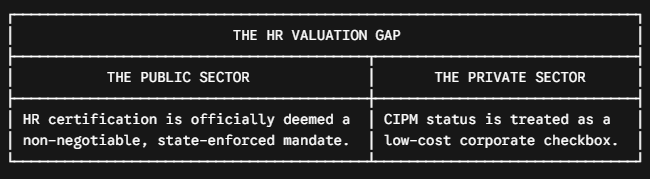
His frustration was less about this one posting and more about a pattern he has watched solidify over the years — recruiters and companies treating HR as an administrative cost center rather than a strategic function, and certification as a checkbox rather than a credential that should carry real wage weight.
“We keep talking about HR being a strategic partner to the business. Then a strategic partner gets advertised for less than what a mid-level driver earns at some of these same companies. Something is not aligning.”
“How Much Were You Expecting?”: The Benchmark Reality Check
Not everyone in the conversation shared Tunde’s outrage, as we see next. The pushback against the outrage is grounded in macroeconomic realities. Femi, a seasoned technical recruiter who has placed talent across multiple tiers of the Nigerian corporate ecosystem, urges a data-driven approach rather than emotional responses.
"Everyone reacts to the headline number, but very few look at the real parameters," Femi points out. "What is the actual, data-backed salary benchmark for an HR Officer with four years of experience specifically in Ibadan, and specifically within a domestic mid-sized LPG distributor? Outrage without a benchmark is just vibes."
Femi emphasizes that talent pools cannot be evaluated through a monolithic lens:
The Location Variable: The Lagos and Ibadan labor markets operate on completely different cost-of-living and wage indexes.
The Corporate Tier Variable: A multinational oil and gas major and a local downstream distributor do not share the same revenue scale or compensation philosophy.
"When professionals collapse all these nuances into generalized indignation, the conversation stops being useful," Femi adds.
Is CIPM Losing Its Weight?
Chiamaka, who holds her own CIPM certification and has sat on hiring panels for HR roles, brought a different, more uncomfortable angle to the table; she believes part of the friction stems from how professional certifications are leveraged in the market. That the certification itself may be part of the problem, not because it lacks rigor, but because it is applied unevenly.
“CIPM has real membership tiers for a reason,” she said. “Associate after you pass your exams. Full Member once you have the relevant work experience to back it up. Fellow at the very top, for people with serious seniority. A lot of these job postings just write ‘CIPM certified’ as if it's one flat thing, and a lot of candidates apply with an Associate-level certification and present it as if it carries the same weight as someone who has put in the years. The certification is doing less signaling work than it should, because the market hasn’t learned to read the tiers.”
Her point sharpens something that the outrage in the original conversation gestured at without quite landing on: the issue may not be that CIPM is undervalued, but that it has become a generic stamp rather than a specific signal. A company budgeting ₦350,000 for a CIPM-certified officer might genuinely believe they are getting a bargain on a senior credential, when in practice they are pricing for, and likely to receive, someone several years away from the experience the original framers of that requirement probably had in mind.