Updated March 12, 2026
Table of Contents
If you’ve ever seen a brand pop up in Google Search, your inbox, Instagram, YouTube, or even inside an AI-generated answer, you’ve already seen digital marketing at work. Social media management sits inside that world, but it is only one part of it.
That’s where a lot of the confusion starts.
People often use digital marketing and social media management like they mean the same thing. They don’t. Digital marketing covers a much wider range of channels and goals. Social media management focuses on building a brand’s presence, performance, and community on social platforms. Industry definitions still reflect that split clearly.
If you’re trying to choose a career path, hire for a role, or understand how modern marketing teams work, it helps to know where the line is and where the overlap starts.
In this article, we’ll break down digital marketing and social media management in plain terms, show how they differ, and explain why both matter more than ever in a time when search, content, and AI-driven discovery are all shaping how people find brands online.
Digital Marketing
Since the world has transcended to the digital age, businesses have taken a U-turn from traditional forms of marketing like newspapers and billboards to something more modern- digital media.
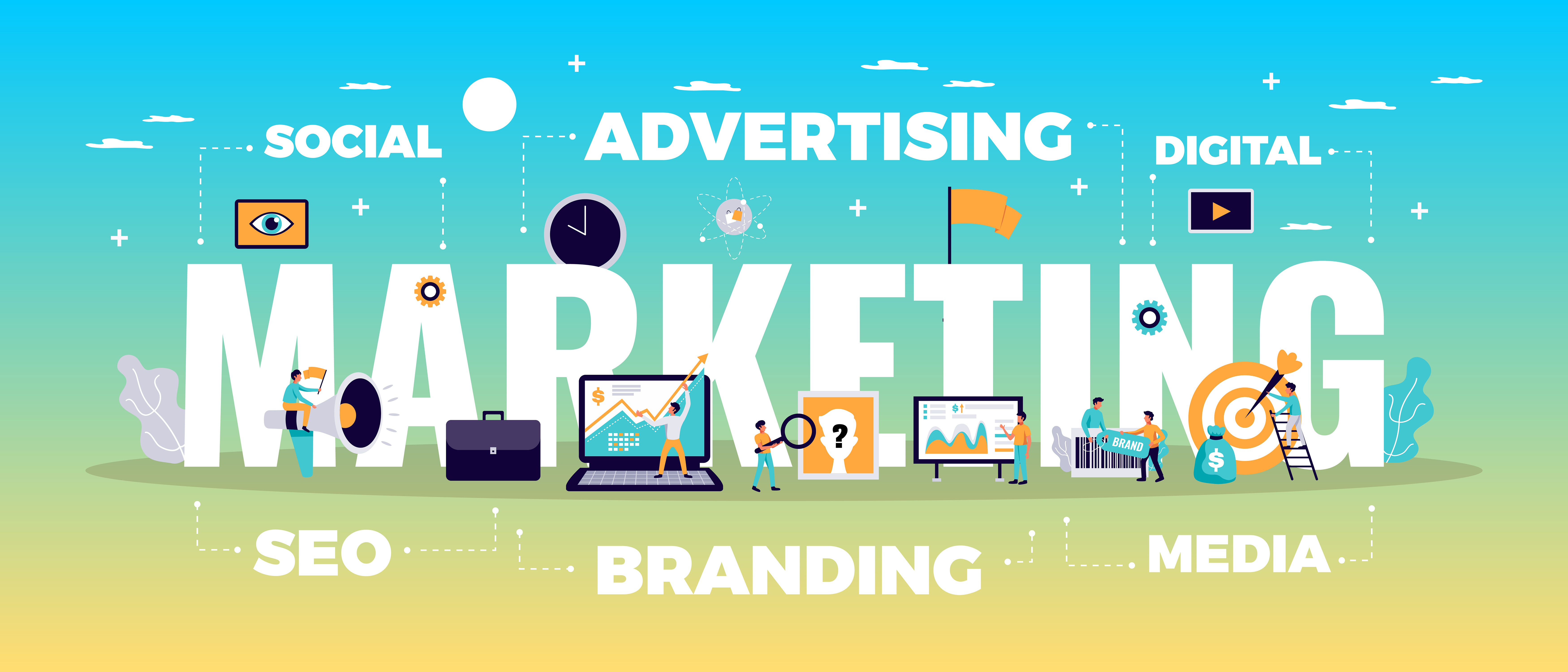
Digital marketing then comprises any online marketing that depends on digital technology like social media and the internet. Digital marketing is all-encompassing and has social media marketing, video marketing, affiliate marketing, and pay-per-click advertising as its subsects. That includes search engines, websites, email, paid ads, content marketing, affiliate marketing, video marketing, and social media.
In simpler terms, digital marketing is about reaching people online across multiple touchpoints and moving them from awareness to action.
A digital marketer is usually concerned with the full journey. That means things like:
getting a brand discovered through search
driving traffic to a landing page
capturing leads
retargeting visitors with ads
nurturing prospects through email
measuring conversions and return on investment
This is what makes digital marketing broad. It is not tied to one channel. It looks at the bigger system. And because it is this broad, digital marketing can include:
Search engine optimization (SEO)
Search engine marketing (SEM)
Email marketing
Content marketing
Social media marketing
Video marketing
Affiliate marketing
Display and paid media campaigns
So when people use “digital marketing” and “social media management” as if they mean the same thing, they are skipping an important detail. Social media is one channel. Digital marketing is the full system.
Digital marketing tools
Digital marketing involves a lot of details and rudiments. It requires a digital presence on almost all platforms. Since this is quite tasking, digital marketers use tools to make the work easier and more efficient.
Digital marketing tools are software that does the heavy lifting. They automate tasks and free up time that would have otherwise gone into tedious repetitive processes. These tools span across;
Email marketing tools to schedule emails and check for parameters like email open rate.
Content creation tools like Graphic design apps, video edit apps, and Google Docs.
Video hosting tools
Website analytics tools
SEO tools to improve your visibility in search results and AI-generated answers. These tools help with keyword research, technical SEO, on-page optimization, and tracking where your brand appears online. AI visibility tools also fit here. For example, Wellows helps track brand mentions and citations across AI platforms like ChatGPT, Gemini, Perplexity, and Google AI experiences, while also showing where competitors are getting recommended instead.
What do digital marketing campaigns entail?
The aim of any digital marketing campaign is to establish an online presence, nurture a target audience, and eventually convert them to paying customers. To do this, digital marketers include details such as;
Search Engine Marketing: It is cheaper for businesses to meet potential customers at the point of need, that is when they are looking for answers versus marketing to an oblivious audience. This led to the use of either paid search advertising or SEO (Search Engine Optimization)
Social media promotions: These are organic posts that followers see. In some cases, followers of followers can also see posts depending on engagement.
Email marketing: Using email marketing campaigns to build an audience, nurture them, then promote services or products to email recipients.
Content marketing : Blogs, landing pages, newsletters, downloadable resources, case studies, and videos all fall here. Good content brings people in, builds trust, and supports both SEO and conversion.
Paid media: This includes social ads, display ads, video ads, and retargeting campaigns. Paid media helps brands scale reach faster and test performance more directly.
Analytics and optimization: Digital marketing does not stop at publishing. It also involves tracking results, learning what works, and improving performance over time.
Social Media Management
Social media is no doubt a part of digital media. In the world of marketing, Social media management is the subsect of digital marketing that focuses mainly on the use of social media platforms for brand awareness and marketing. Instagram, Twitter, and Facebook are the primary targets of social media management.
Social Media Management entails creating content for various social platforms and audiences, interacting with current and potential consumers, and developing an online presence. That means social media management is about more than filling a content calendar. It is about helping a brand stay visible, relevant, and responsive on platforms like Instagram, TikTok, LinkedIn, Facebook, X, and YouTube.
Social Media Management tools
Scheduling tools to schedule and automate posts
Analytical tools to track and analyze the performance of social media posts
Monitoring tools to find out public opinion about a brand.
Engagement tools to manage all replies and comments from one inbox.
In recent years, many social media tools have added AI features for caption generation, idea support, scheduling suggestions, and performance insights. AI and automation are becoming more common in social media workflows, but the role still depends heavily on judgment, creativity, and audience awareness.
Why Social Media Management?
Social media platforms have become a huge part of daily communication. They have created something that shares some similitude to an alternate, virtual world where we all exist. Social media has also become one of the main ways people discover brands, talk to them, and decide whether they trust them.
A strong social media presence helps brands:
stay visible
build familiarity
create community
respond quickly to customers
shape perception in public
keep pace with culture and conversation
But social media is not only about posting often. Good social media management means understanding what the audience wants from each platform and how the brand should behave in that space.
A brand might sound playful on TikTok, polished on LinkedIn, and more community-led on Instagram. Social media management is what makes that feel coherent instead of chaotic.
It also matters because audience behavior keeps shifting. New features, new formats, and new platforms can change what performs well. Short-form video, creator-led content, and conversational brand voices have all pushed social teams to be faster and more audience-aware than before.
A huge factor of business success is putting products and services precisely where the target audience resides. Hence, social media marketing has become a necessity in today’s digital world. Through it, companies can get in the faces of their customers and grow their customer base.
Elements of social media management
Everything starts with a plan. A good foundation for success is a proper strategy. Social Media Managers define objectives and content types in line with the overall brand agenda.
Consistency takes the front stage. Most social media platforms favor pages that stick to a consistent posting schedule by increasing visibility.
Engagement monitoring. The goal doesn’t stop at posting constantly. Even more, attention is paid to the number of likes and shares. This is an indicator of public interest and approval.
Community management . This is one of the biggest parts of the role. Social media is not a one-way channel. Replying to comments, engaging with followers, and managing public interactions are central to the work.
Advertisement. In some cases, brands run ads to increase their reach and drive brand awareness.
Paid social support. In many teams, social media managers also work alongside paid media specialists or support boosted posts and awareness campaigns.
The differences between Digital Marketing and Social Media Management
The simplest difference is this:
Digital marketing is the wider system. Social media management is one part of that system.
Here’s how that plays out in practice:
1. Scope
Digital marketing covers multiple channels, including search, websites, email, paid ads, SEO, content, and social media.
Social media management focuses mainly on social platforms and the content, conversations, and brand presence inside them.
2. Goals
Digital marketing is usually tied more directly to traffic, leads, conversions, sales, and measurable business growth.
Social media management focuses more on visibility, engagement, audience connection, and brand presence, though it can support conversion too.
3. Metrics
Digital marketers are often tracking:
traffic
cost per click
conversion rate
lead quality
customer acquisition
return on ad spend
Social media managers are often tracking:
reach
impressions
engagement rate
shares
saves
audience growth
sentiment
4. Platforms and channels
Digital marketing works across many digital spaces.
Social media management works within social ecosystems.
5. Nature of the work
Digital marketing tends to be more funnel-driven and cross-functional.
Social media management tends to be more content-driven, real-time, and audience-facing. That said, the best teams do not treat them as separate islands. A social media strategy works better when it is tied to bigger business and digital goals. A digital marketing strategy works better when the brand’s social presence is sharp, active, and trusted.
How to pick the career path for you?
If you are predisposed to being in the shadows to orchestrate a lot of complex fine detail, digital marketing might be your thing.
But if you prefer to be on the front lines and in the bustle of social media life, social media management is probably your thing.
There is also a practical point here: these paths overlap more than people think.
A strong social media manager benefits from understanding the wider digital ecosystem. A strong digital marketer benefits from understanding how audiences behave on social platforms. The more connected your skill set is, the more useful you become.
That matters even more now because modern marketing is changing. Search is not just about blue links anymore. Discovery can happen through short-form video, creator content, newsletters, AI-generated answers, and traditional search all at once. Google’s AI Overviews and other AI platforms are now part of how people gather information, which means digital marketers are thinking beyond classic SEO into broader visibility and citation tracking.
So if you are choosing between the two, do not think only in terms of job titles. Think about the kind of work you want to do every day.
Do you want to manage the full machine? Or do you want to own one of its most visible and fast-moving parts?
Both paths are valid. Both can lead to strong careers. The better choice is the one that fits your strengths, interests, and the kind of marketing problems you want to solve.
Take care though, these are only suggestions, the only way to know for sure if you are better suited to a field is to map out a plan to explore your options.
A better strategy would be to subscribe to the CareerBuddy Weekly Newsletter, where you get premium career tips and resources as well as prompt updates on fresh job openings.