You Can Build a Career in Gaming Content in Africa. These Creators Are Proof.
The job description doesn't exist anywhere official. There's no LinkedIn category for it, no university course preparing you for it, and if you tell most Nigerian or South African parents you're pursuing it full-time, you will spend the next twenty minutes explaining yourself. But across Africa, a generation of gaming content creators is quietly building real careers in a space that most people still dismiss as a hobby.
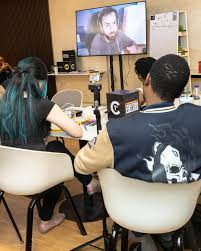
The Carry1st COD:M Creators College — a five-day, fully-funded creator development program that wrapped in Lagos last week — offered a rare inside look at what that career actually costs, what it actually pays, and what it takes to build it sustainably.
View this post on Instagram
The ten creators selected for the inaugural cohort represent a cross-section of what this path looks like on the ground: the ambitions, the setbacks, the grinding inconsistency, and the moments that make it worth continuing.
Two of them sat down to talk about it honestly. What they said is worth reading, whether you're a creator yourself, considering becoming one, or simply trying to understand where the African digital economy is actually heading.
The Career Nobody Mapped Out for You
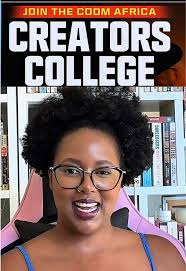
Tecna, a South African creator and one of the Creators College's ten selected participants, had a stable career before content creation. She was a Monitoring and Evaluation Practitioner; the kind of job that makes sense on paper, contributes to society, and provides a predictable income. She left it anyway.
"Once I left my job, I found more satisfaction in creating content," she says. The shift wasn't impulsive. It was gradual, then sudden, the slow accumulation of evidence that the thing she was doing in her spare time was the thing she actually wanted to do full-time, followed by the decision to act on it.
What she walked into was a career path with almost no infrastructure. "You must figure out a lot on your own," she says. "There isn't exactly much financial support, resources, and it is not a well-known career path, so you must do a lot of explaining and research on your own."
This is the part of the creator economy story that rarely gets told alongside the success stories. The people who make it work in Africa do so largely by reverse-engineering what works in other markets, figuring out what translates to their context, building support systems from scratch, and absorbing costs — of equipment, of internet, of time — that their counterparts in more developed markets don't have to think about as hard.
Saphra, another Creators College participant, came from a different starting point but arrived at the same structural reality. She applied to the program with 46 followers. Not 46,000. Forty-six. Her answer to the obvious question, why apply with such a small audience, was straightforward: "I thought, why not me? The worst answer I could get was no."
That audacity is not just a personality trait. In the absence of a clear career ladder, a mentorship network, or institutional support, it is a professional strategy. The creators building this path in Africa have had to develop a high tolerance for uncertainty and a willingness to move before conditions are perfect, because they never are.
What It Actually Pays
The monetisation conversation in the African creator economy tends to oscillate between two unhelpful poles: either the rags-to-riches story of the creator who blew up and got the brand deal, or the dismissive suggestion that nobody is making real money from this yet. The reality is more granular and more interesting than either narrative.
Tecna is currently earning from her content through two streams: a monthly income from Carry1st's existing creators programme, tied to agreed deliverables, and gifts from her live streams. "The Carry1st creator programme provides a predictable income while streaming income fluctuates," she says. "While none of it is a lot of money, I believe it's a great start."
The keyword is predictable. One of the structural challenges of building a content career is that most of the income is variable:
it depends on algorithm performance, on viewer mood, and on whether a particular piece of content catches. The Carry1st programme gives Tecna a stable base, which changes the financial calculus of pursuing this full-time in a meaningful way.
Saphra's monetisation is at an earlier stage but no less real. She made her first TikTok withdrawal recently. She's earning from live gifts. "That moment stays with you," she says of that first withdrawal. It's not a living wage yet. It is proof of concept; evidence that the value she's creating is legible to an audience willing to support it financially.
Coming out of the Creators College, both creators have a clearer picture of where the money can come from as they scale. Tecna sees three paths: brand deals, her own merchandise, and coaching for up-and-coming streamers and gamers. Saphra is focused on sponsorships and live monetisation, building a strong enough community to attract brand partnerships while maintaining consistent streaming income.
What's striking about both roadmaps is that they're diversified. Neither creator is betting everything on one revenue stream. That's not accidental: it’s the lesson that most experienced creators eventually learn, usually the hard way, about the danger of depending entirely on platform algorithms or a single brand relationship.
The Moment It Becomes Real
Both Tecna and Saphra described a version of the same experience: a moment when the career stopped being theoretical and became undeniably real.
For Tecna, it was the realisation that people were waiting for her content; that an audience had formed around what she was making, with expectations she was responsible for meeting. "I started taking it seriously when I realised there were people expecting my content," she says. "I had to deliver to the people."
For Saphra, the version of that moment came during the Creators College livestream lab, when she went live for the first time ever; nervous, uncertain, watched by 700 viewers by the end of a stream she nearly didn't do. "That someone is already waiting for your content," she says, describing the most important thing she learned at the program. "You don't have to chase trends or force yourself into a box to be relevant. Your niche exists, and your audience will find you when you show up authentically."
Both of these are the same insight arrived at from different directions: the audience precedes the confidence. You don't build the following and then start taking it seriously. You start taking it seriously, and the following confirms that you were right to.
What the Creators College Gave Them
The COD:M Creators College didn't create these career paths. Tecna and Saphra were already on them. What it did was give them the frameworks, the language, and the community to move along them faster and with more intention.
Tecna describes the change in her content as a shift from reactive to strategic. "Before I would just post whatever I considered funny or cool," she says. "Now I see so much potential in some of my older and future content, and I can apply myself better in how I structure it." Her content is now organised around three pillars: entertaining, educational, and inspiring. That's not a formula she invented, but rather the result of five days of structured thinking about what content is actually for.
Saphra's shift is equally concrete. “Before, I was just posting. Now, I'm building. I approach content like a business. There's planning, execution, and strategy behind it."
Both creators came in with raw talent and a work ethic. They left with a system.
What This Means for You
If you're reading this and thinking about whether a content career in gaming is viable, the honest answer is yes, with significant caveats.
The infrastructure is improving. Carry1st's investment in African gaming, the Creators College itself, and the growing number of brand partnerships flowing into the continent's gaming ecosystem are real signals that the economics of this career path are shifting. Brands are starting to treat African creators as investments rather than afterthoughts.
But the path still requires what it has always required from African creators: the willingness to build your own support system, to figure things out without a map, to keep showing up when the immediate returns don't justify the effort, and to make the decision, as Tecna did, that this is the contribution you want to make, not despite the difficulty, but fully aware of it.
Tecna put it cleanly: "Initially, monitoring and evaluation was my contribution to improving education and supporting job creation in South Africa. Then I started researching esports and content creation more deeply, and I realised there is room and opportunity for this to become my career while contributing to society. This path brings me more joy and satisfaction than a typical office job."
That’s not a hobby talking. That’s a career.
CareerBuddy attended the COD: M Creators College as a media partner. The program was hosted by Carry1st in partnership with Call of Duty: Mobile and Infinix.