Children of Blood and Bone Is Not For Us. We Should Stop Pretending Otherwise.
The casting controversy is real. But fixating on it misses the larger and more uncomfortable argument: this film was never designed with Nigerian audiences as the primary concern.
Let us start with the facts as they stand.
Children of Blood and Bone is a fantasy novel by Tomi Adeyemi, a Nigerian-American author who has spoken openly about drawing from Yoruba culture, mythology, and language to build the world of Orïsha. The book sold three million copies worldwide, spent several hundred weeks on the New York Times bestseller list, and was optioned for a film adaptation upon publishing. The film, directed by Gina Prince-Bythewood and produced by Paramount Pictures, was filmed partly in Lagos in 2025 and is scheduled for release in January 2027.
The cast includes Thuso Mbedu, Amandla Stenberg, Damson Idris, Viola Davis, Cynthia Erivo, Idris Elba, Chiwetel Ejiofor, Lashana Lynch, and Regina King. It is, by any measure, a stacked ensemble of Black talent. It also includes, among the Nigerian representation added after backlash, Richard Mofe-Damijo and Ayra Starr — in supporting roles, announced after the controversy, as a gesture toward acknowledgment rather than a structural commitment.
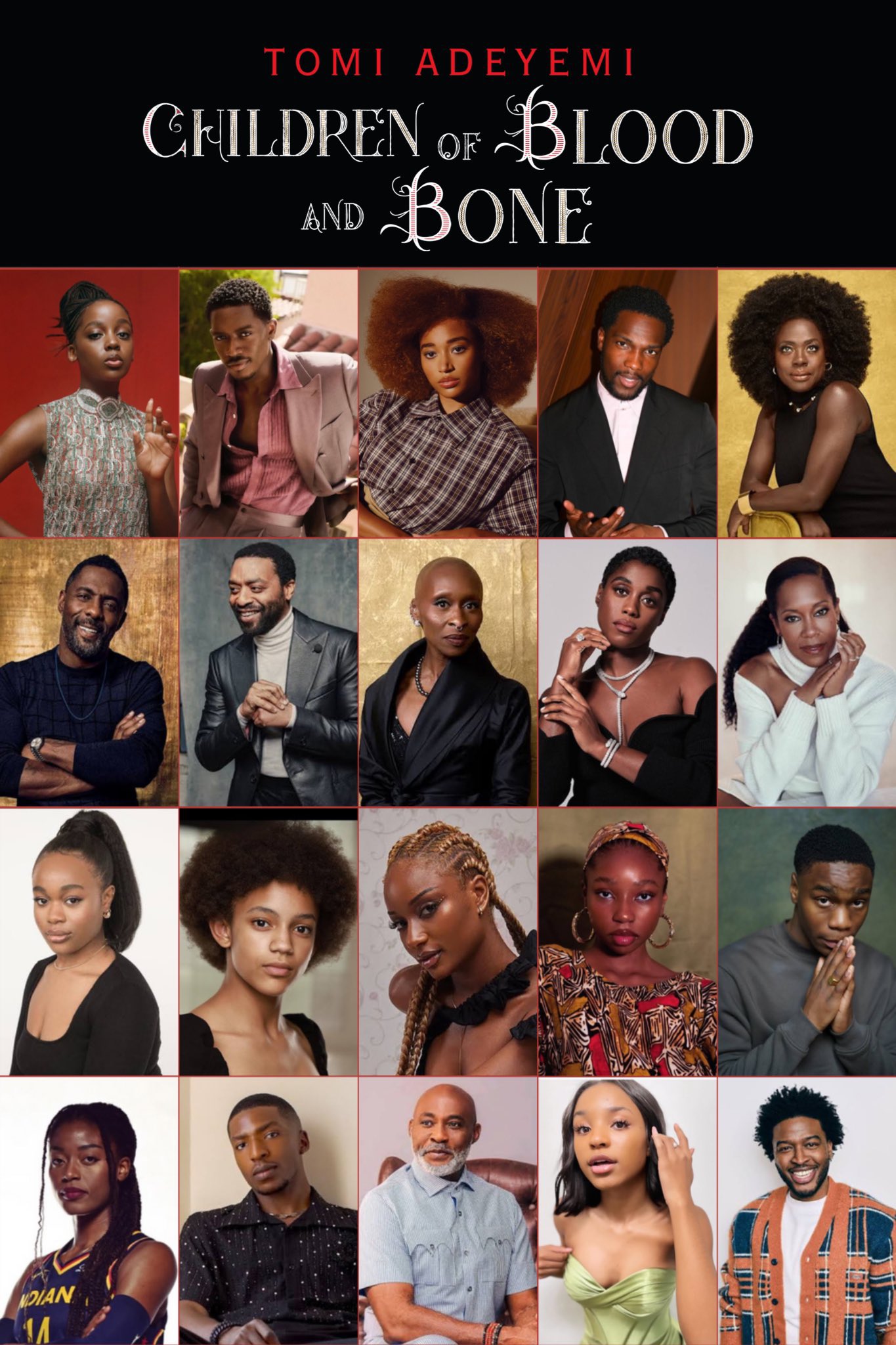
The internet has expended considerable energy on casting Amandla Stenberg as Princess Amari, a character whose dark skin is not incidental to her arc but central to it, as colorism is a defining feature of the world Adeyemi built. Stenberg is biracial. The disconnect is real, and the criticism is legitimate. But I am going to argue that the casting controversy, as consuming as it has been, is a distraction from the more fundamental problem.
• • •
The Book Was Already Written for Someone Else
Tomi Adeyemi has said that she wrote Children of Blood and Bone, drawing inspiration from Harry Potter and Avatar: The Last Airbender as much as from Yoruba mythology. She wrote it in America. She wrote it for a Young Adult market that is predominantly American. She wrote it, in her own words, partly in response to the Black Lives Matter movement and the police killings of Black Americans; not primarily as a story about the Niger Delta, Ìlú Yorùbá, or the spiritual ecosystem that orisha worship represents.
This is fine. Authors are allowed to use their heritage as raw material for stories that serve other purposes. What is less fine is the subsequent confusion: from the author, from the studio, from fans on both sides about who this story actually belongs to and who it was actually made for.
Yoruba mythology is not a set of aesthetics available for decoration. Ogun, Sango, Yemoja, Obatala — these are living traditions within specific communities, with specific protocols, histories, and custodians. When those traditions are extracted from their context, renamed, and reframed to make them legible to a Western fantasy audience, and then packaged into a product that those same communities are expected to celebrate as representation, something has gone wrong. The celebration is being asked in the wrong direction.
• • •
The Nollywood Argument
The counterargument that comes up consistently is that Nollywood actors simply cannot pull global numbers; that the market reality of a Hollywood blockbuster requires names that international audiences recognize, and that Nigerian actors, however talented, do not yet have that kind of international recognition.
This is true, and it is also the most circular argument imaginable. Nigerian actors cannot pull global numbers because they have not been given the global platform that produces global numbers. The one moment where a story rooted in Nigerian mythology was going to be turned into a major Hollywood blockbuster — one of the most powerful platforms for establishing new names in the global consciousness — was the moment to break the cycle. Instead, the cycle was reinforced. The Nigerian names that appear in the film are supporting roles added in response to pressure, not lead roles built into the original vision.
The Da Vinci Code comparison being made in some corners of this debate is more instructive than it initially seems. When Catholics objected to Dan Brown's novel, their argument was not that the book should not have been written; it was that it offered a distorted, commercially motivated interpretation of their tradition that would become, for many readers, their primary introduction to it. That is exactly what Children of Blood and Bone risks doing for Yoruba mythology. It will be, for millions of people who have never encountered the orisha tradition in any other context, their first and possibly only exposure to it. The version they encounter will be a Hollywood adaptation of an American-Nigerian author's interpretation, filtered through Western fantasy conventions, optimized for a global franchise. That is several degrees of separation from the source.
• • •
What This Is Not
This is not an argument that Tomi Adeyemi should not have written the book, or that the film should not exist. Both do. Both will. The film will almost certainly be visually spectacular: it was shot in Lagos over 74 days with a significant budget and a director who made The Woman King. It may well be a good film. I am prepared to believe it will be a good film.
This is also not an argument that the cast is wrong because of their personal identities. Thuso Mbedu is a formidable actress, and this author won't hesitate to admit that even if, in a reverse fixture, Mbedu's kinsmen would rather chew hot charcoal than let such a casting occur. Damson Idris is and will always be compelling. Viola Davis in any role is worth watching.
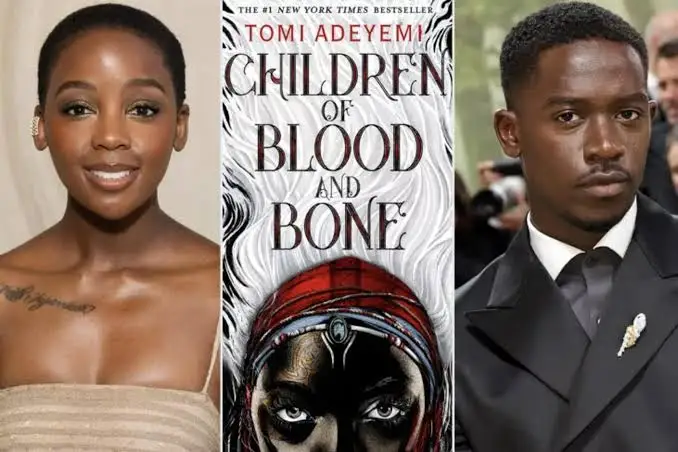
The issue is not the individuals. The issue is the structural decision to build a film around Yoruba mythology without centering Yoruba creative authority, and then to frame token additions made under pressure as evidence of the film's commitment to authenticity.
What this is is an argument for clarity. When we understand that this film was made primarily for a Western audience that consumes African aesthetics as a novelty, we can appreciate it on those terms without confusing it for something it is not. We do not have to perform gratitude for representation that was designed to serve a market rather than a community.
• • •
The sooner Nigerian audiences accept that they are not the target demographic for Children of Blood and Bone, the sooner they can have a more honest conversation about what they actually want. That conversation is about Nollywood telling its own mythological stories, on its own terms, with its own creative authority, for its own audience, without needing Hollywood's permission or production budget for them to matter.
That film does not exist yet (the quality of writing and production required for it is another conversation entirely). But for certain, Children of Blood and Bone is not it. It might, however, be the thing that makes enough people angry enough to go and build it.
In an ideal world, that would be the best possible outcome. Do we live in one?