Who Was Soboma George? The Niger Delta Warlord Behind the Legend

    Uncover the true story of Soboma George, the Niger Delta warlord Burna Boy mentioned. From prison breaks to his tragic end, explore the legend behind the name.

    Jump to
    Who Was Soboma George? The Niger Delta Warlord Behind the Legend
    Illustration · CareerBuddy

    Soboma George: The Warlord Burna Boy Mentioned, and the Life Nobody Told You About

    Most people met the name in a verse. The actual man (his prison breaks, his loyalties, his end on a Port Harcourt street while watching a football match) is far more complicated.

    In the famous heartbreak anthem "Last Last," Burna Boy sings:

    "I dey Port Harcourt when dem kill Soboma
    I dey try to buy motor, one Toyota Corolla
    My feelings been dey swing like jangolova
    Feelings been dey swing like jangolova"

    For most listeners in 2022, the name was new; a reference that carried the weight of the song's emotional register without most people being able to attach it to an actual person. The name felt like a legend, and by all means, it was.

    Soboma George was real. And his life is one of the more extraordinary stories to emerge from the Niger Delta, a region that has produced extraordinary stories in direct proportion to the violence, poverty, and oil wealth that collided there for decades.

    •   •   •

    Who He Was
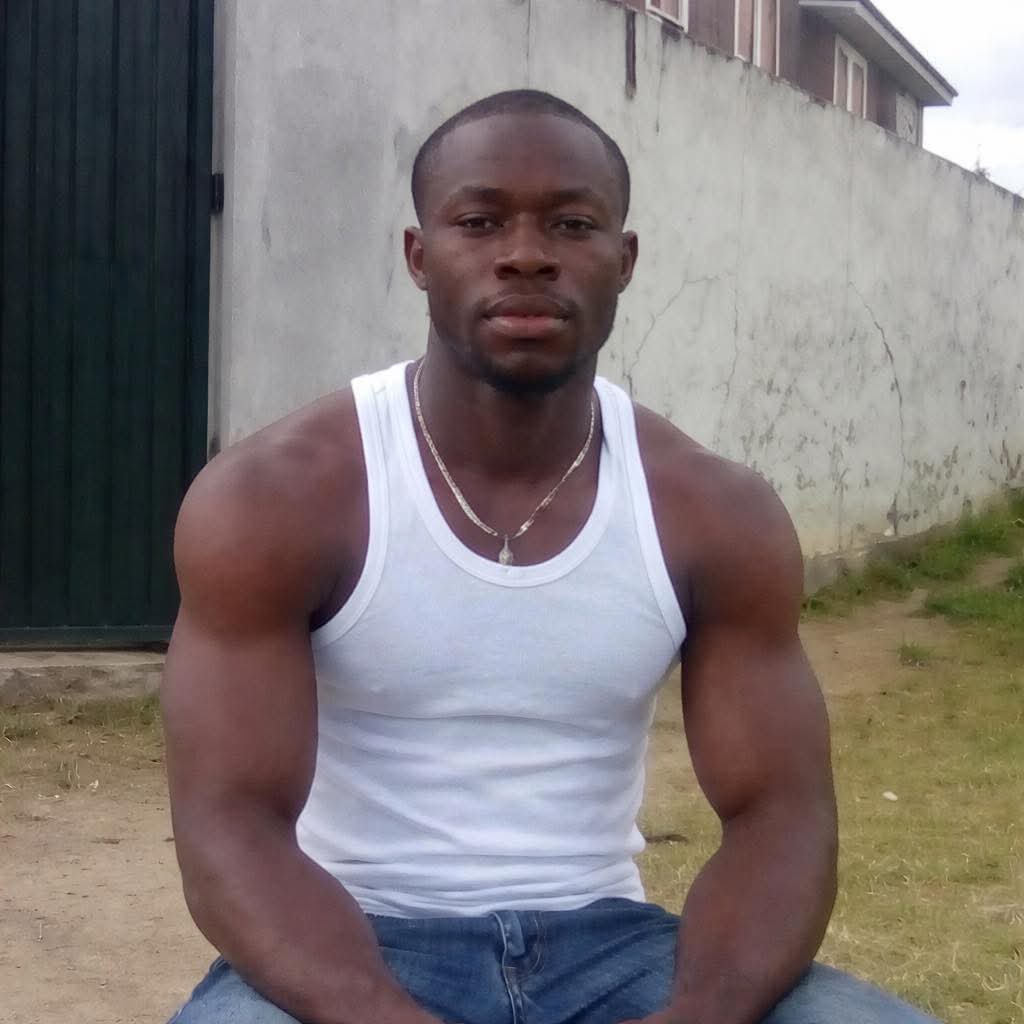
    Soboma George

    Soboma George was born in Buguma, in the Asari-Toru Local Government Area of Rivers State, into the Kalabari-speaking part of the Niger Delta. Those close to him said he attended Stella Maris College in Port Harcourt, though it is unclear whether he completed his secondary education there. He was, by multiple accounts, a man whose appearance gave nothing away — gentle-looking, understated, the kind of person you would not register as dangerous until you had reason to.

    He began his life in the world of cult confraternities long entangled with politics, oil, and power in Rivers State. His early affiliation was with Ateke Tom's Icelanders, at the time one of the most powerful cult groups in the region, and he rose quickly to become Ateke's second-in-command. The two eventually fell out, as such alliances tend to, and Soboma went to found his own organization: the Outlaws, a group that would grow into one of Port Harcourt's most feared armed factions.

    •   •   •

    The Prison Breaks

    This is where the story becomes something that would be implausible in fiction.

    In 2004, Soboma was arrested and taken to Port Harcourt Prison on charges including the alleged killing of Minabo Fiberesima, a member of Dokubo-Asari's Niger Delta People's Volunteer Force. While he was inside, Golden Kalio — the third-in-command in the Icelander hierarchy, below Soboma — made the fatal decision to drive to court in a brand new Mercedes E-Class to testify against him.

    From his prison cell, Soboma ordered Kalio's assassination. His men found Kalio outside the court building and shot him multiple times in the chest. He died instantly.

    Eight days later, the Icelanders retaliated. Soboma's younger brother, Senibo George, was abducted, killed, and, in an act of deliberate, brutal symbolism, his body was packed into a sack and dumped on I.B. Johnson Street, one of Port Harcourt's busiest roads.

    In 2005, Farah Ipalibo Dagogo, an ally and fellow commander, a man described in reporting from the period as arriving at operations with teenage fighters wielding AK-47s in both hands, broke into Port Harcourt Prison with his men and freed Soboma along with other inmates. The prison break that should have ended a story instead extended it by five more years.

    •   •   •

    The Life After Escape

    Soboma went underground, resurfacing in Owerri before eventually returning to Rivers State. He and Farah linked up with the Movement for the Emancipation of the Niger Delta — MEND — the loose umbrella organization that claimed to fight for resource control and self-determination for the people of the Niger Delta and whose actual operations ranged from pipeline bombings and kidnappings of oil workers to genuine political agitation against the federal government's extraction of Niger Delta oil with minimal benefit to the people who lived there.

    Soboma commanded MEND's eastern Niger Delta operations. He was Port Harcourt's most wanted man and also, periodically, a client of the political system; his Outlaws were reported to have intimidated voters at gunpoint in multiple elections, turning polling units in southern Port Harcourt into whatever the PDP needed them to be.

    In January 2007, police arrested him again, this time for a traffic offence on Hospital Road, which suggests either extraordinary boldness or a very ordinary errand, or possibly both. Within hours, hundreds of his boys had mobilized toward the Central Police Station. Farah arrived with his fighters and broke him out again.

    By 2008, his alliance with Farah had frayed beyond repair. The region was consuming itself in inter-gang warfare — over oil bunkering routes, political patronage, territory, and the kinds of personal slights that become existential in environments where violence is the primary language of grievance.

    •   •   •

    The Amnesty, and What Came After

    Soboma George; the life after

    In August 2009, something shifted. President Umaru Yar'Adua's government extended an amnesty to Niger Delta militants; a genuine attempt to end the armed conflict that had been costing Nigeria billions in oil production losses and countless lives in the communities caught between the militants, the military, and the oil companies.

    On August 7, 2009, Soboma George led twenty of his fighters to the State Security Service office in Port Harcourt. He surrendered forty rifles and four General Purpose Machine Guns. He pleaded with the Rivers State government to reconsider its planned demolition of waterfront communities — his communities — warning that it could trigger fresh violence. He vowed not to return to militancy.

    He meant it, or tried to. What followed was a period that those close to him described as a genuine, if awkward, transition. He organized a football tournament for his neighbourhood. He was trying, in the unglamorous way of men who have spent years living outside any normal social structure, to build something that belonged to the world he had been promised entry into.

    •   •   •

    Nembe Street, August 24, 2010

    He was leaving the football grounds he had organized on a Tuesday evening when the cars arrived. Three heavily armed men in a Kia saloon had followed him from the field, waiting for a moment that felt right. On Nembe Street in Borokiri, they opened fire.

    Soboma George died there, along with two others; including Joy John Ejims, a groundnut seller who happened to be nearby. She was not the target. She was simply there.

    He was in his early thirties.

    The circumstances of his killing remain contested. One version, supported by court proceedings, involves a hit connected to a plot to assassinate Peremobowei Ebebi, the former Deputy Governor of Bayelsa State. A man named Doubra Ogbe was convicted of the killing and placed on death row, though he has maintained his innocence through multiple appeals, claiming wrongful conviction.

    The region's security sources pointed to something simpler: control of the lucrative oil bunkering operations that the amnesty had temporarily disrupted but not ended, and rival factions using the post-amnesty confusion to eliminate competitors while the military's attention had shifted.

    •   •   •

    The morning after his death, people called from the Netherlands to confirm the news. The internet, such as it was in Rivers State in 2010, was filled with reactions. For some, he was a bloody cultist whose death was inevitable. For others, he was one of the foot soldiers of a genuine struggle — a man shaped by the Delta's particular misery and its particular opportunities, whose story reflected something true about what the region had been allowed to become.

    It is this writer's understanding that Burna Boy did not choose the name carelessly. Controversial, yet iconic, Soboma George was certainly not a symbol of anything clean or uncomplicated, but because his life was the specific kind of hard that comes from existing in a place where the system has decided your suffering is acceptable.

    The verse does not attempt to redeem him. But its context remembers him, and a sullen pain from losing someone pivotal.

    Advertisement

    Advertisement

    In-Article Ad

    Native ad placement

    Ultimate CV Template for African Tech Roles
    Free Download

    Ultimate CV Template for African Tech Roles

    ATS-friendly CV template designed for tech jobs in Lagos, Nairobi, Cape Town, and remote positions.

    Get this on WhatsApp

    Join the CareerBuddy WhatsApp Group for daily career, salary, and AI-at-work intel for African professionals. Free, two taps.

    More Stories You'll Love

    Discussion

    Sign in or create a free CareerBuddy account to join the discussion. Comments are moderated; abusive posts are removed.

    No comments yet. Be the first — set the tone.